

Möchten Sie eine E-Mail-Adresse bei @ingenieros.es?
Registrieren Sie sich in unserer Jobbörse und beantragen Sie Ihr kostenloses E-Mail-Konto @ingenieros.es für die private oder berufliche Nutzung.






Wichtige Nachrichten




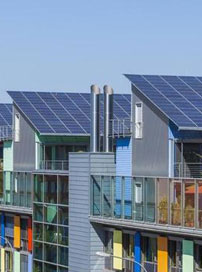
In einer neueren Veröffentlichung von Dr. Joel Van Embden vom Australier CSIRO Material Science and Engineering, präsentiert die Ergebnisse durch die Verwendung einer low-cost Methode zur Herstellung von Solarzellen auf Basis von Nanokristalle, mit geringen Umweltauswirkungen und guter Effizienz.
Bislang haben Solarzellen aus Nanokristallen die Verwendung von hochgiftige Lösungsmittel oder die hohe Konzentrationen an organischen Schadstoffen enthalten. In dieser neuen Studie konnten die Forscher billige und umweltbelastende Lösungsmittel wie einfache Alkohole verwenden.
In dieser ersten Phase der Entwicklung dieser neuen Solarzellen hat sich bereits die Entwicklung der Solarzellen in den letzten Jahren beschleunigt. Effizienz von etwa 7,7 %, was sie zu einem vielversprechenden Kandidaten für zukünftige kommerzielle Anwendungen macht. Dies zeigt, dass es skalierbare Technologien gibt, die Alternativen zu heutigen, wirtschaftlich und ökologisch kostspieligen Technologien sind und billigere Materialien verwenden, die für effiziente Solarzellen verwendet werden können.
Eine neue Methode
Die Forscher stellten ein neues "Solartinte" her, indem sie die Oberfläche der Nanokristalle chemisch modifizierten und so eine hohe Polarität erreichten. Diese hohe Polarität wurde erreicht, indem man organische Moleküle auf der Oberfläche von Nanokristallen verband.
Die Nanokristallfarbe wurde dann auf leitfähige Glas-Substrate gelegt und mit Selendampf mit einem Prozess behandelt, der Selenisierung genannt wird. Dieser Prozess verwandelt den Nanokristallinfilm in einen mikrokristallinen Film, der die Reaktion der Filme auf das Licht erheblich verbessert.
Derzeit ist der Grad des Kornwachstums durch diesen Selenisierungsprozess begrenzt, was die größte Herausforderung für Nanokristallzellen darstellt.
Die Richtung dieser Forschung konzentriert sich nun auf die Steigerung der Effizienz der Geräte durch Anpassung der Zusammensetzung der Nanoglasfarben. Diese Entwicklung öffnet die Tür für komplexe Tintenformulierungen, die für den Druck von Solarzellen der nächsten Generation geeignet sein werden.
Weitere Informationen
Joel van Embden, et al. "Cu2ZnSn4xse4(1−x) Solar Cells from Polar Nanocrystal Inks." Journal of the American Chemical Society. DOI: 10.1021/ja501218u
________________________
Phys.org
Quelle
Weitere Branchennachrichten
Las células solares de perovskita suman un nuevo avance en la investigación fotovoltaica. Un trabajo publicado el 9 de octubre de 2026 en Nature Photonics presenta dispositivos con una eficiencia certificada del 27,31 %, mediante una estrategia que modifica los contactos moleculares de la célula. El estudio aborda también la estabilidad: los dispositivos muestran una pérdida de rendimiento prácticamente despreciable...
Weitere Informationen
El posible uso de inteligencia artificial en ataques contra entidades financieras de Corea del Sur vuelve a centrar la atención en la automatización de la ciberdelincuencia. Reuters informó el 9 de octubre de 2026 de investigaciones en nueve bancos sobre incidentes que podrían haber contado con asistencia de IA. El dato debe leerse con cautela: investigar el papel de estas...
Weitere Informationen
La Universidad de Castilla-La Mancha ha acogido los días 7 y 8 de octubre una reunión de coordinación de FIREFLY, un proyecto europeo que busca electrificar parte de la cadena de valor de la industria química y reducir su dependencia de los recursos fósiles. El encuentro se celebró en la Facultad de Ciencias y Tecnologías Químicas de Ciudad Real. El...
Weitere Informationen
La Escuela Técnica Superior de Ingeniería Industrial de Barcelona, perteneciente a la Universitat Politècnica de Catalunya, celebra sus 175 años con una exposición que conecta su historia con los desafíos tecnológicos y sociales de las nuevas generaciones de ingenieros. La muestra, inaugurada el 8 de octubre, puede visitarse hasta el 17 de octubre en CASA SEAT, en Barcelona, con entrada...
Weitere Informationen
La Universidad Pontificia Comillas ha reunido a representantes institucionales, académicos y especialistas del sector tecnológico y de defensa para analizar las oportunidades y los desafíos de la inteligencia artificial en la seguridad y la defensa de España. El seminario, celebrado el 7 de octubre y difundido por la Universidad el día 9, fue organizado por la Facultad de Derecho de...
Weitere Informationen