

Möchten Sie eine E-Mail-Adresse bei @ingenieros.es?
Registrieren Sie sich in unserer Jobbörse und beantragen Sie Ihr kostenloses E-Mail-Konto @ingenieros.es für die private oder berufliche Nutzung.








Wichtige Nachrichten
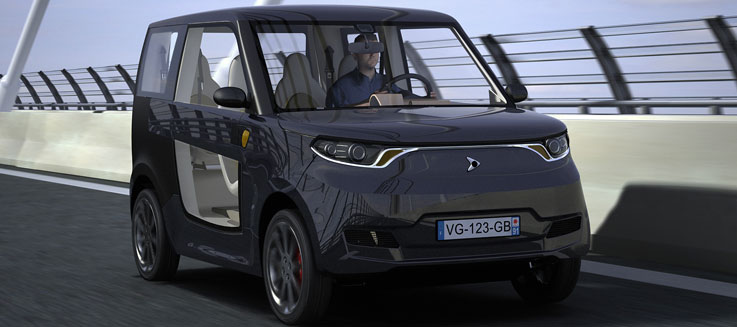



Ein internationales Projekt, an dem Forscher aus dem Oberster Rat für wissenschaftliche Forschung (CSIC) hat die Gestaltung eines Elektrofahrzeug komplett recycelbar.
Das neue Auto würde aus Teilen bestehen, die mit Materialien natürlichen Ursprungs, wie natürliche Fasern y Bioharze.
El ECOSHELL-Projekt (Development of new light high-performance environmentally benign exposites made of bio-materials and bio-resins for electronic car application) hat außerdem innovative Materialien für die Herstellung dieser Autos entwickelt, die sie superleicht machen, da sie auf der Grundlage von natürlichen Fasern und Bio-Rosinen hergestellt werden. Zu den verwendeten Materialien, die natürlich sind, gehören Flachsfasern, Bio- Polyurethan und Bio-Epoxidharz.
"Obwohl es immer noch nur ein Design ist, wollen wir in den nächsten Jahren daran arbeiten, um einen Prototyp zu entwickeln, der alle Qualitäten, die wir erreicht haben, demonstrieren kann," fährt der CSIC Forscher fort José Ignacio Robla, Nationales Zentrum für Metallforschung.
Ein leichtes, preiswertes und praktisches Auto
Das entwickelte Elektroauto, ein "utilitäres" Modell des Typs L7e (weniger als 400 kg), hat einen sehr niedrigen Verbrauch, der rund um die 4,83 kWh. Die neuen natürlichen und bio-Rosinenfasern, die vom Projekt entwickelt wurden, machen dieses Auto superleicht.
Der CSIC-Forscher erklärt: "Die Forscher haben während des Projekts außerdem eine Montageanlage mit minimalen Umweltauswirkungen entwickelt, die geltenden EU-Vorschriften konsultiert und umgesetzt, ein Qualitätsplan für ihre Produktion entwickelt und der Lebenszyklus des Fahrzeugs selbst sowie aller Materialien und Prozesse, die an seiner Herstellung beteiligt sind, analysiert. Wir sind daher der Ansicht, dass dieses Fahrzeug eine der besten Alternativen zur Mobilität in den Großstädten wäre."
"Die Herausforderung hat nicht nur die Materialentwicklung, sondern auch die Neugestaltung der Fahrzeugstruktur, der Architektur, der Schnittstellen und der Produktionsprozesse erfordert," erklärt Robla. ECOSHELL wurde von einem Europäischen Konsortium aus Unternehmen und Institutionen aus Spanien, Frankreich, dem Vereinigten Königreich, Finnland und Deutschland entwickelt.
_______________________________
CSIC
Quelle
Weitere Branchennachrichten
La Universidad de Castilla-La Mancha ha acogido los días 7 y 8 de octubre una reunión de coordinación de FIREFLY, un proyecto europeo que busca electrificar parte de la cadena de valor de la industria química y reducir su dependencia de los recursos fósiles. El encuentro se celebró en la Facultad de Ciencias y Tecnologías Químicas de Ciudad Real. El...
Weitere Informationen
La Escuela Técnica Superior de Ingeniería Industrial de Barcelona, perteneciente a la Universitat Politècnica de Catalunya, celebra sus 175 años con una exposición que conecta su historia con los desafíos tecnológicos y sociales de las nuevas generaciones de ingenieros. La muestra, inaugurada el 8 de octubre, puede visitarse hasta el 17 de octubre en CASA SEAT, en Barcelona, con entrada...
Weitere Informationen
La Universidad Pontificia Comillas ha reunido a representantes institucionales, académicos y especialistas del sector tecnológico y de defensa para analizar las oportunidades y los desafíos de la inteligencia artificial en la seguridad y la defensa de España. El seminario, celebrado el 7 de octubre y difundido por la Universidad el día 9, fue organizado por la Facultad de Derecho de...
Weitere Informationen
La Universidad Politécnica de Madrid dedica este 9 de octubre una jornada a los retos de integrar el hidrógeno en la industria y el transporte, dos ámbitos en los que la reducción de emisiones exige combinar diferentes soluciones tecnológicas. La Comunidad del Hidrógeno y Pilas de Combustible de la UPM organiza el encuentro en el salón de actos de la...
Weitere Informationen
La ingeniera de telecomunicación Alicia Ramón Catalán es la ganadora del Premio Pioneras_IT 2026, promovido por el Colegio Oficial de Ingenieros de Telecomunicación y la Asociación Española de Ingenieros de Telecomunicación para visibilizar el talento femenino en el sector. La elección, anunciada el 28 de septiembre, culmina una convocatoria cuyo acto de entrega se programó para el 8 de octubre...
Weitere Informationen