


Möchten Sie eine E-Mail-Adresse bei @ingenieros.es?
Registrieren Sie sich in unserer Jobbörse und beantragen Sie Ihr kostenloses E-Mail-Konto @ingenieros.es für die private oder berufliche Nutzung.









Wichtige Nachrichten
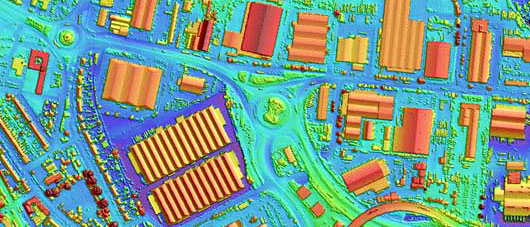



Die Aragonesische Stiftung für die Entwicklung der Erdbeobachtung (FADOT) wurde für das Projekt Innovation Aragón nominiert "Automatische Erkennung von Konstruktionen mit LiDAR-Daten”.
Die in diesem Projekt entwickelte Methode kann verwendet werden, um Gebäude in Solaranlagen zu erkennen, die als nicht gebaut aufgeführt sind, oder um die Anzahl der zusätzlichen nicht registrierten Anlagen zu erhöhen, die automatisch gebaut wurden.
Nach einer öffentlichen Abstimmung im Internet wurde dieses Projekt in erster Linie von den 30 vorgewählten Ideen abgeschlossen. Dies ermöglicht es Ihnen, Ihr Projekt in der PILOT International Forum am 26. und 27. Mai in Brüssel Palais de Congresos de Saragossa, in dem sie die Möglichkeit haben, ihren Innovationskonzept vorzustellen, wobei sie auf die Verbesserungen hinweisen, die sie mit sich bringt.
LiDAR-Technologie
Die LiDAR-Technologie verwendet das Licht in Form eines gedrückten Lasers, um Entfernungen zu Objekten zu messen. Insbesondere mit LiDAR-Daten, die von Luft- oder Satellitenplattformen generiert werden, können präzise Informationen in drei Dimensionen (x, y, z) über die Form der Erde und ihre Oberflächeneigenschaften generiert werden. Das heißt, für jeden Punkt (x,y) auf der Erdoberfläche kann man die Höhe (z) des Objekts erhalten, das dort mit einer Genauigkeit von 30cm genau ist.
Das Produkt, das von FADOT ist ein Beispiel für die Anwendung dieser Technologie. Ausgehend von der Nennhöhe des Bodens im Vergleich zu der tatsächlichen Höhe, die durch die Daten von LiDAR angegeben wird, können die Höhenanomalien identifiziert werden, die das Vorhandensein eines Objekts an diesem Punkt angeben. Auf diese Weise können Gebäude und Gebäude automatisch erkannt werden. Wenn die offiziellen Informationen des Katasters mit den tatsächlichen Informationen aus den Daten von LiDAR verglichen werden, können alle Gebäude in Solaranlagen identifiziert werden, die als nicht gebaut aufgeführt sind. Sie kann auch dazu dienen, die Anzahl der zusätzlichen Anlagen zu erhöhen, die gebaut, aber nicht registriert sind.
___________________
Aragon erforscht
Quelle
Weitere Branchennachrichten
Las células solares de perovskita suman un nuevo avance en la investigación fotovoltaica. Un trabajo publicado el 9 de octubre de 2026 en Nature Photonics presenta dispositivos con una eficiencia certificada del 27,31 %, mediante una estrategia que modifica los contactos moleculares de la célula. El estudio aborda también la estabilidad: los dispositivos muestran una pérdida de rendimiento prácticamente despreciable...
Weitere Informationen
El posible uso de inteligencia artificial en ataques contra entidades financieras de Corea del Sur vuelve a centrar la atención en la automatización de la ciberdelincuencia. Reuters informó el 9 de octubre de 2026 de investigaciones en nueve bancos sobre incidentes que podrían haber contado con asistencia de IA. El dato debe leerse con cautela: investigar el papel de estas...
Weitere Informationen
La Universidad de Castilla-La Mancha ha acogido los días 7 y 8 de octubre una reunión de coordinación de FIREFLY, un proyecto europeo que busca electrificar parte de la cadena de valor de la industria química y reducir su dependencia de los recursos fósiles. El encuentro se celebró en la Facultad de Ciencias y Tecnologías Químicas de Ciudad Real. El...
Weitere Informationen
La Escuela Técnica Superior de Ingeniería Industrial de Barcelona, perteneciente a la Universitat Politècnica de Catalunya, celebra sus 175 años con una exposición que conecta su historia con los desafíos tecnológicos y sociales de las nuevas generaciones de ingenieros. La muestra, inaugurada el 8 de octubre, puede visitarse hasta el 17 de octubre en CASA SEAT, en Barcelona, con entrada...
Weitere Informationen
La Universidad Pontificia Comillas ha reunido a representantes institucionales, académicos y especialistas del sector tecnológico y de defensa para analizar las oportunidades y los desafíos de la inteligencia artificial en la seguridad y la defensa de España. El seminario, celebrado el 7 de octubre y difundido por la Universidad el día 9, fue organizado por la Facultad de Derecho de...
Weitere Informationen