

Möchten Sie eine E-Mail-Adresse bei @ingenieros.es?
Registrieren Sie sich in unserer Jobbörse und beantragen Sie Ihr kostenloses E-Mail-Konto @ingenieros.es für die private oder berufliche Nutzung.






Wichtige Nachrichten




In Europa ereignen sich jährlich mehr als 1 Million Verkehrsunfälle. Schätzungen zufolge kamen 2013 in der EU etwa 26.000 Menschen dadurch ums Leben. Um die Reaktionszeiten der Rettungsdienste zu verkürzen und Leben zu retten, hat das Plenum des Europäisches Parlament (PE) gab am Dienstag, den letzten Dienstag, grünes Licht für den Einbau eines Notrufgeräts oder -ausrüstung zur Notrufnummer 112 in alle Neufahrzeuge ab dem 31. März 2018, falls das Fahrzeug einen Unfall hat.
Alle Fahrzeuge, die in Europa verkauft werden, müssen mit diesem System ausgerüstet sein. Obwohl es bereits Hersteller in ihren Fahrzeugen gibt, wird in ein paar Wochen das Datum bekannt sein, ab dem die Installation dieses Geräts für alle in Europa verkauften Fahrzeuge obligatorisch sein wird, so erklärte die Generaldirektorin für Verkehr, María Segui.
eCall-System
Das Ziel dieser Technologie, genannt "Hallo Call Houten," ist es, die 112 automatisch zu kontaktieren, um die Rettungsdienste darauf hinzuweisen, dass es zu einem Unfall gekommen ist und dass sie so schnell wie möglich an den Ort kommen, wodurch Leben gerettet und die Schwere der Verletzungen verringert werden kann.
Der automatische Anruf gibt den Notrufdiensten nur die Mindestdaten, wie das Modell des Autos, die Art des verwendeten Benzins, die Unfallzeit und die genaue Lage des Autos. Die Automobilhersteller müssen auch sicherstellen, dass die Technologie "Halbleiter" die vollständige und dauerhafte Löschung der gesammelten Daten ermöglicht.
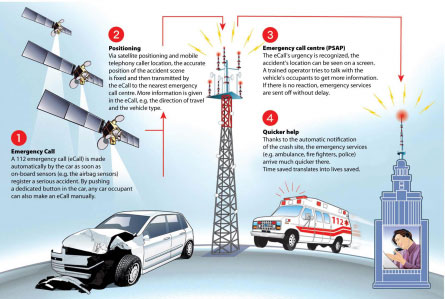
Um diese Informationen so bald wie möglich vorwegzunehmen und zu übermitteln, wird es eine Koordinierung des gesamten Kommunikationsnetzes geben, so dass der Notruf über alle Kanäle und alle Mobilfunkanbieter gehen wird, über die er vorrangig und kostenlos gehen muss.
Parallel dazu muss das Handbuch des Fahrzeugs klare Informationen über die Verarbeitung der Gerätedaten enthalten und auf die gleiche Weise über das Internet verfügbar sein.
Verwandte Informationen:
Quelle
Weitere Branchennachrichten
La Universidad de Castilla-La Mancha ha acogido los días 7 y 8 de octubre una reunión de coordinación de FIREFLY, un proyecto europeo que busca electrificar parte de la cadena de valor de la industria química y reducir su dependencia de los recursos fósiles. El encuentro se celebró en la Facultad de Ciencias y Tecnologías Químicas de Ciudad Real. El...
Weitere Informationen
La Escuela Técnica Superior de Ingeniería Industrial de Barcelona, perteneciente a la Universitat Politècnica de Catalunya, celebra sus 175 años con una exposición que conecta su historia con los desafíos tecnológicos y sociales de las nuevas generaciones de ingenieros. La muestra, inaugurada el 8 de octubre, puede visitarse hasta el 17 de octubre en CASA SEAT, en Barcelona, con entrada...
Weitere Informationen
La Universidad Pontificia Comillas ha reunido a representantes institucionales, académicos y especialistas del sector tecnológico y de defensa para analizar las oportunidades y los desafíos de la inteligencia artificial en la seguridad y la defensa de España. El seminario, celebrado el 7 de octubre y difundido por la Universidad el día 9, fue organizado por la Facultad de Derecho de...
Weitere Informationen
La Universidad Politécnica de Madrid dedica este 9 de octubre una jornada a los retos de integrar el hidrógeno en la industria y el transporte, dos ámbitos en los que la reducción de emisiones exige combinar diferentes soluciones tecnológicas. La Comunidad del Hidrógeno y Pilas de Combustible de la UPM organiza el encuentro en el salón de actos de la...
Weitere Informationen
La ingeniera de telecomunicación Alicia Ramón Catalán es la ganadora del Premio Pioneras_IT 2026, promovido por el Colegio Oficial de Ingenieros de Telecomunicación y la Asociación Española de Ingenieros de Telecomunicación para visibilizar el talento femenino en el sector. La elección, anunciada el 28 de septiembre, culmina una convocatoria cuyo acto de entrega se programó para el 8 de octubre...
Weitere Informationen