

Möchten Sie eine E-Mail-Adresse bei @ingenieros.es?
Registrieren Sie sich in unserer Jobbörse und beantragen Sie Ihr kostenloses E-Mail-Konto @ingenieros.es für die private oder berufliche Nutzung.







Wichtige Nachrichten




Die neue Stromverbindung zwischen Spanien und Frankreich wird Verdoppelung der Stromerzeugungskapazität zwischen den beiden Ländern. Diese Linie wird am nächsten 5. Oktober in den Handel aufgenommen, und in ihrer ersten Woche wird die Verbindungskapazität auf 2.000 Megawatt (MW) erhöht.
Das im Jahr 2008 gestartete Projekt war für Electric Network of España (REE) und für Réseau de Transport d'Électricité (TEN) eine technologische Herausforderung und symbolisiert die drei Schwerpunkte der europäischen Energiepolitik, da sie zur Erhöhung der Sicherheit der Elektrizitätsversorgung in Europa, zur Bekämpfung des Klimawandels und zur Entwicklung des europäischen Elektrizitätsbinnenmarktes beiträgt.
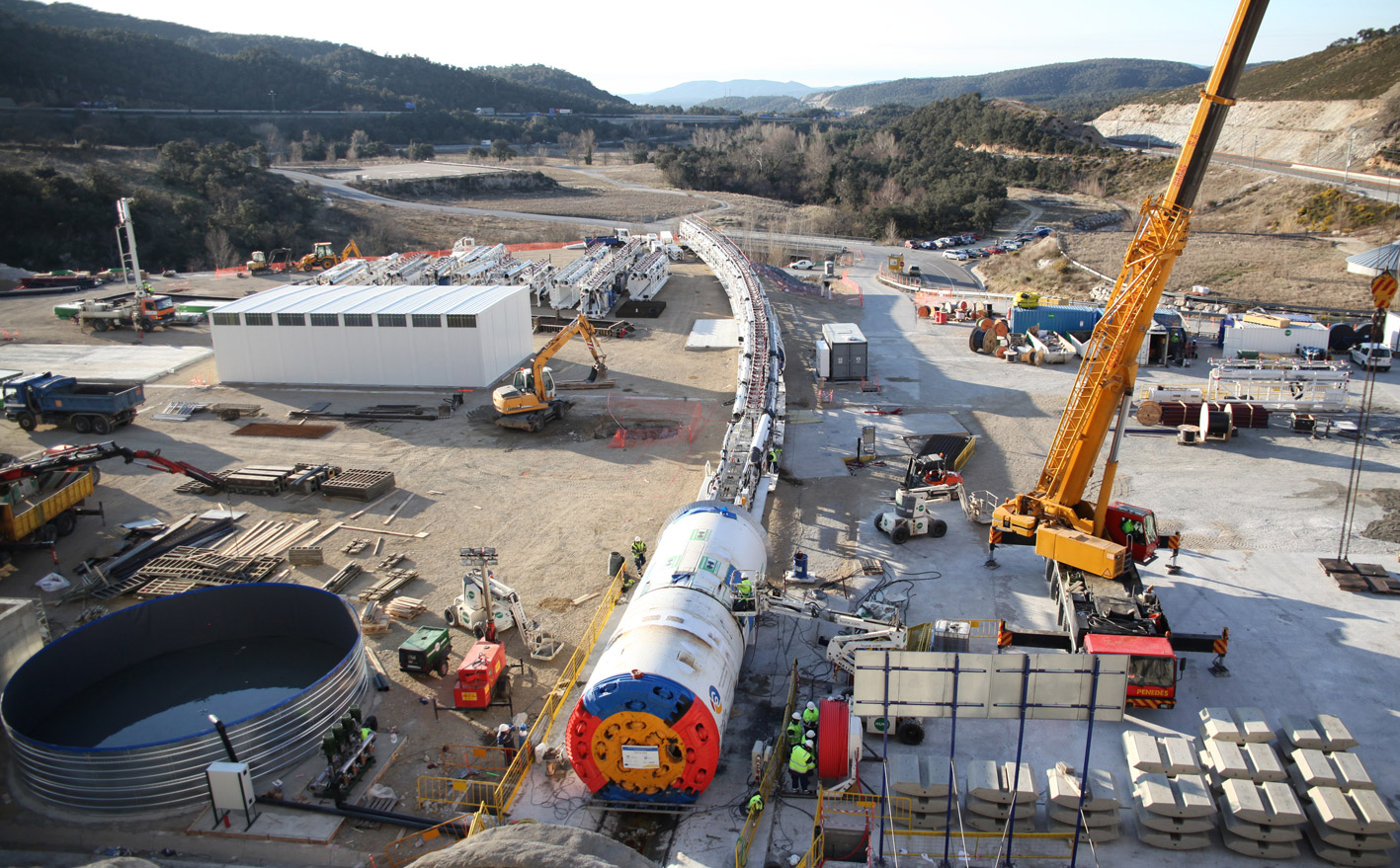
Tunelador Alberes
Die Bauarbeiten an der Linie wurden abgeschlossen in Februar 2015, zusammen mit der offiziellen Eröffnung. Seit diesem Datum funktioniert die Leitung im technischen Testmodus.
Es ist das erste Mal, dass eine unterirdische Verbindung dieser Länge auf einem Leistungsniveau von 2.000 Megawatt mit der neuesten Technologie für den Gleichstromtransport erfolgt.

Die Tunelador Alberes, während der Bohrarbeiten
Technische Daten und Investitionen
Die Linie, mit einer Länge von 64,5 km, verbindet die Gemeinden Santa Llogaia, in der Nähe von Figueras (Gerona), mit dem Dorf Baixas, in der Nähe von Perpignán. Die Strecke wird durch einen Betongraben vollständig durchbohrt, mit Ausnahme des Abschnittes, der die Pyrenäen überquert, der durch einen 8,5 Kilometer langen Tunnel verläuft, der parallel zur Hochgeschwindigkeitsbahnstrecke verläuft.

Der Tunnel ist beendet.
Die technologische Entwicklung hat auch die wandelnden Stationen erreicht, die an jedem Ende der Strecke gebaut wurden und in der Welt einzigartig sind, und zwar sowohl wegen ihrer Technologie als auch wegen der Fähigkeit, den Sinn des Energieaustausches zwischen Spanien und Frankreich in nur 50 Millisekunden.

Detail des Kabels der Verbindungsleitung zwischen Spanien und Frankreich (Foto: François Chevreau).
Die Investitionen in das Projekt beliefen sich auf 700 Mio. EUR, davon 225 Mio. EUR im Rahmen des Programms EEPR (European Energy Programme for Recovery). Darüber hinaus wird die Europäische Investitionsbank durch ein Darlehen in Höhe von 350 Mio. EUR an REE und TEN unterstützt.
Quelle
Weitere Branchennachrichten
El Colegio Oficial de Ingenieros Industriales de Aragón y La Rioja (COIIAR) acogió en su sede de Zaragoza la conferencia «Soberanía tecnológica y dependencia externa: impacto de la tecnología, la industria, la cadena de suministro y la financiación en el “alistamiento” de la defensa europea», impartida por el vicealmirante del Cuerpo de Ingenieros de la Armada y doctor ingeniero de...
Weitere Informationen
El CDTI Innovación ha difundido una oportunidad de cooperación tecnológica entre España y China para impulsar el desarrollo de maquinaria inteligente destinada a túneles, minería y otros trabajos de construcción subterránea. La iniciativa busca incorporar a una empresa española con capacidades propias de investigación, desarrollo e innovación a un consorcio que plantea diseñar, fabricar y validar sistemas de mayor precisión...
Weitere Informationen
El Ministerio de Transportes y Movilidad Sostenible ha establecido unas nuevas bases comunes para determinados procesos selectivos de los subgrupos A1 y A2, entre ellos los correspondientes al Cuerpo de Ingenieros Aeronáuticos y al Cuerpo de Ingenieros Técnicos Aeronáuticos. La resolución, fechada el 15 de octubre de 2026 y publicada en el Boletín Oficial del Estado el día 28, reorganiza...
Weitere Informationen
El Colegio de Ingenieros de Caminos, Canales y Puertos ha constituido un comité técnico para seguir la evolución de las informaciones relativas al accidente ferroviario ocurrido en Urda, en la provincia de Toledo, y contribuir a la identificación de medidas correctoras que refuercen la seguridad y el funcionamiento del sistema. La primera reunión del grupo se celebró el 29 de...
Weitere Informationen
La undécima edición de Egurtek, Foro Internacional de Arquitectura y Construcción en Madera, ha reunido en Bilbao a profesionales de la ingeniería, la arquitectura, la industria forestal y la edificación para analizar las aplicaciones contemporáneas de la madera. La cita, programada los días 28 y 29 de octubre de 2026 en Bilbao Exhibition Centre, cuenta con la colaboración de la...
Weitere Informationen