

Möchten Sie eine E-Mail-Adresse bei @ingenieros.es?
Registrieren Sie sich in unserer Jobbörse und beantragen Sie Ihr kostenloses E-Mail-Konto @ingenieros.es für die private oder berufliche Nutzung.







Wichtige Nachrichten




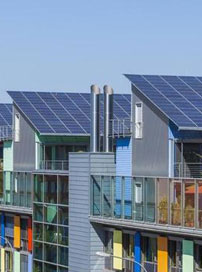
Nach Angaben des statistischen Amtes der Gemeinschaft Eurostat, die Energie aus erneuerbaren Quellen wird geschätzt 13,0% des Bruttoendenergieverbrauchs in der EU 2011.
Osten Eurostat-Bericht • die Entwicklung der letzten Jahre, in denen sie von einem erneuerbaren Beitrag von 7,9% 2004 und12,1% 2010:13 Prozent des Jahres 2011. Ziel der EU ist es, bis 2020 einen Anteil von 20% an der Nutzung erneuerbarer Energien am Bruttoendenergieverbrauch zu erreichen. Seit 2004 ist der Anteil der erneuerbaren Energien am Endenergieverbrauch in allen Mitgliedstaaten gestiegen..
Im Falle Spaniens lag der Anteil des Energieverbrauchs aus sauberen Quellen um zwei Prozentpunkte über dem europäischen Durchschnitt und stieg auf 15%.
Daten nach Ländern
Die größten Erhöhungen waren in diesem Zeitraum in Schweden (von 38,3% im Jahr 2004 auf 46,8% im Jahr 2011), Dänemark (von 14,9% auf 23,1%), Österreich (22,8% auf 30,9%), Deutschland (4,8% auf 12,3 %) und Estland (18,4% auf 25,9%).
Es sei darauf hingewiesen, dass Estland 2011 das erste Land der Union war, das sein individuelles Ziel bis 2020 erreichen wollte, und dass es es sogar übertroffen hat, mit 25,9% gegenüber 25%, die vorgeschlagen wurden.

Die am wenigsten entwickelten EU-Mitgliedstaaten waren Malta (0,4%), Luxemburg (2,9%), das Vereinigte Königreich (3,8%), Belgien (4,1%) und die Niederlande (4,3%).
Obwohl Schweden eines der Länder mit dem größten Anteil erneuerbarer Energien ist, war es eines der wenigen Länder, in denen der Anteil sauberer Energien zwischen 2010 und 2011 von 47,9% auf 46,8% sank. Rumänien (von 22,9% auf 21,4%) und Slowenien (von 19,6% auf 18,8%) begleitet, und Luxemburg blieb von 2010 bis 2011 stabil bei 2,9%.
______________________________
Weitere Informationen:
Quelle
Weitere Branchennachrichten
La Universidad de Castilla-La Mancha ha acogido los días 7 y 8 de octubre una reunión de coordinación de FIREFLY, un proyecto europeo que busca electrificar parte de la cadena de valor de la industria química y reducir su dependencia de los recursos fósiles. El encuentro se celebró en la Facultad de Ciencias y Tecnologías Químicas de Ciudad Real. El...
Weitere Informationen
La Escuela Técnica Superior de Ingeniería Industrial de Barcelona, perteneciente a la Universitat Politècnica de Catalunya, celebra sus 175 años con una exposición que conecta su historia con los desafíos tecnológicos y sociales de las nuevas generaciones de ingenieros. La muestra, inaugurada el 8 de octubre, puede visitarse hasta el 17 de octubre en CASA SEAT, en Barcelona, con entrada...
Weitere Informationen
La Universidad Pontificia Comillas ha reunido a representantes institucionales, académicos y especialistas del sector tecnológico y de defensa para analizar las oportunidades y los desafíos de la inteligencia artificial en la seguridad y la defensa de España. El seminario, celebrado el 7 de octubre y difundido por la Universidad el día 9, fue organizado por la Facultad de Derecho de...
Weitere Informationen
La Universidad Politécnica de Madrid dedica este 9 de octubre una jornada a los retos de integrar el hidrógeno en la industria y el transporte, dos ámbitos en los que la reducción de emisiones exige combinar diferentes soluciones tecnológicas. La Comunidad del Hidrógeno y Pilas de Combustible de la UPM organiza el encuentro en el salón de actos de la...
Weitere Informationen
La ingeniera de telecomunicación Alicia Ramón Catalán es la ganadora del Premio Pioneras_IT 2026, promovido por el Colegio Oficial de Ingenieros de Telecomunicación y la Asociación Española de Ingenieros de Telecomunicación para visibilizar el talento femenino en el sector. La elección, anunciada el 28 de septiembre, culmina una convocatoria cuyo acto de entrega se programó para el 8 de octubre...
Weitere Informationen