

Möchten Sie eine E-Mail-Adresse bei @ingenieros.es?
Registrieren Sie sich in unserer Jobbörse und beantragen Sie Ihr kostenloses E-Mail-Konto @ingenieros.es für die private oder berufliche Nutzung.








Wichtige Nachrichten
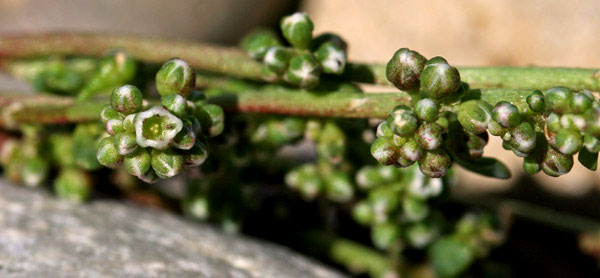



Studien an einheimischen Bodenpflanzen in der Umgebung der alten gesammelt Mine Monica de Bustarviejo (Madrid) haben hohe Cadmium-, Kupfer-, Blei- und Zinkkonzentrationen und sehr hohe Arsenkonzentrationen, vor allem in den Wurzeln, gezeigt, obwohl einige Pflanzenarten höhere Konzentrationen im Luftbereich aufwiesen. Unter diesen ist die Art Referrylole telephiifolia wurde als möglicher Bleiakkumulator und „Hyperakkumulator“ von Arsen identifiziert und könnte daher bei künftigen Arbeiten zur Phytosanierung kontaminierter Böden eingesetzt werden, laut dem Forschungsgruppe Materialtechnologie und Umwelt (THEMA) der Technische Hochschule für Bauingenieurwesen der Polytechnische Universität Madrid (UPM).
Seit Jahrhunderten beruht die Bedeutung von Arsen auf seinem giftigen Charakter. Ihre Toxizität hängt jedoch von der chemischen Form oder Art ab, in der sie sich befindet (organisch oder anorganisch). Auf der anderen Seite werden einige Schwermetalle je nach Konzentration als wesentlich oder giftig angesehen, während andere toxisch sind und das Nervensystem und die Organe beeinflussen können. Bestimmte Böden stellen eine natürliche Quelle von Arsen und Schwermetallen dar, obwohl menschliche Maßnahmen, insbesondere die Bergbautätigkeit, dazu beitragen, dass die Mengen dieser toxischen Elemente in den Oberflächenschichten des Bodens steigen, die auch Jahrhunderte nach Beendigung der Tätigkeit erhalten bleiben.
Das Hauptproblem bei der Schwermetallkontamination besteht darin, dass diese nicht abgebaut werden können, weshalb derzeit die Verwendung von Pflanzen und Mikroorganismen als Methoden zur Bodendekontaminierung untersucht wird. Die Akkumulation von giftigen Metallen in Pflanzen erfordert jedoch eine Kontrolle und Entsorgung, um ihre Aufnahme in die trophe Kette zu vermeiden.
Die hohen Arsenkonzentrationen, die die Forscher der UPM in den Pflanzen aus dem Monica-Minen gefunden haben, führten zu Studien zur Identifizierung und Quantifizierung von Arsenarten in diesen Pflanzen, wobei eine Analysemethode angewandt wurde, die eine Unterscheidung von bis zu 11 Arsenarten ermöglicht. Ziel dieser Analysen war es, den Gehalt an toxischen Arten zu ermitteln und zu verstehen, wie hocharsenhaltige Pflanzen in diesen Medien überleben können, ohne Toxizitätssymptome zu zeigen. Die entwickelte Methode ermöglichte die Unterscheidung zwischen Arsenarten, die in Form einfacher Ionen mit größerer Mobilität vorhanden sind, und Arsen, das stärker mit strukturellen Komponenten verbunden ist.
Die Ergebnisse zeigten ein hohes Maß an Biotransformation von Arsen (zwischen 70 und 89
Quelle
Weitere Branchennachrichten
Las células solares de perovskita suman un nuevo avance en la investigación fotovoltaica. Un trabajo publicado el 9 de octubre de 2026 en Nature Photonics presenta dispositivos con una eficiencia certificada del 27,31 %, mediante una estrategia que modifica los contactos moleculares de la célula. El estudio aborda también la estabilidad: los dispositivos muestran una pérdida de rendimiento prácticamente despreciable...
Weitere Informationen
El posible uso de inteligencia artificial en ataques contra entidades financieras de Corea del Sur vuelve a centrar la atención en la automatización de la ciberdelincuencia. Reuters informó el 9 de octubre de 2026 de investigaciones en nueve bancos sobre incidentes que podrían haber contado con asistencia de IA. El dato debe leerse con cautela: investigar el papel de estas...
Weitere Informationen
La Universidad de Castilla-La Mancha ha acogido los días 7 y 8 de octubre una reunión de coordinación de FIREFLY, un proyecto europeo que busca electrificar parte de la cadena de valor de la industria química y reducir su dependencia de los recursos fósiles. El encuentro se celebró en la Facultad de Ciencias y Tecnologías Químicas de Ciudad Real. El...
Weitere Informationen
La Escuela Técnica Superior de Ingeniería Industrial de Barcelona, perteneciente a la Universitat Politècnica de Catalunya, celebra sus 175 años con una exposición que conecta su historia con los desafíos tecnológicos y sociales de las nuevas generaciones de ingenieros. La muestra, inaugurada el 8 de octubre, puede visitarse hasta el 17 de octubre en CASA SEAT, en Barcelona, con entrada...
Weitere Informationen
La Universidad Pontificia Comillas ha reunido a representantes institucionales, académicos y especialistas del sector tecnológico y de defensa para analizar las oportunidades y los desafíos de la inteligencia artificial en la seguridad y la defensa de España. El seminario, celebrado el 7 de octubre y difundido por la Universidad el día 9, fue organizado por la Facultad de Derecho de...
Weitere Informationen